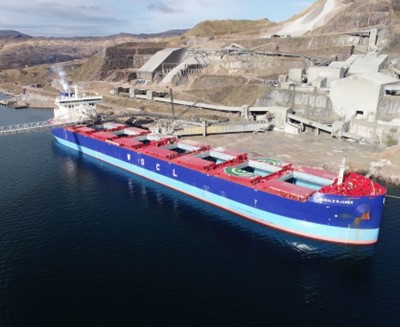
Marine Safety Management System for Glensanda Harbour
Developing marine safety documents aligned to the updated Ports & Marine Facilities Safety Code
Learn more

The Port of Southampton’s five-berth container terminal is the most productive in the UK. Heavily trafficked by Very Large and Ultra Large Container Ships, access through the deep-water channel is critical for the future operation of Southampton’s container trade.
To establish the spatial use of Category 6 and 7 container vessels, the world’s largest vessel type, navigating throughout the harbour’s jurisdiction, our specialists worked with Associated British Ports - ABPmer’s sister company - to undertake a full swept path analysis.
Swept path analysis determines the area of sea or navigation channel (the path) that is covered (or swept) by a moving vessel. By recording the vessel’s transit using its Automatic Identification System (AIS) transmission, and accounting for the vessel’s dimensions and orientation, a footprint of sea area occupied by the vessel can be determined. Through the combination of these footprints over the course of a vessel’s transit, a swept path can be determined which allows analysis of manoeuvring characteristics, turning radius and sea area or navigation channel occupancy.
The objectives of the swept path analysis for were to:
Calculate the swept path for all vessels with a length overall (LOA) greater than 396 m
Calculate swept path density, identifying locations in the study area with greatest concentration
Compare inbound and outbound vessel swept path
The analysis provided insights into the channel’s capacity to accommodate deep-draught vessels and allowing the identification of areas that may require future dredging, or areas that could be dredged to a different or lesser depth.
This information will be critical for informed and strategic decision-making for the port. The detailed visualisation of the navigable area will inform future port operations and marine safety requirements through the identification of high-density and constraint-prone areas, and will support the optimisation of port layout and maintenance.
By integrating this data into operational planning, ABP Southampton can ensure that navigation remains safe and efficient, particularly for deep-draught and ultra-large vessels.
Learn more about swept path analysis at our blog
Our maritime risk specialists are dedicated to helping ports and other marine operators meet the requirements of the Ports & Marine Facilities Safety Code, regularly developing and auditing Safety Management Systems.
Ready to speak to one of our specialists about your requirements? Get in touch.




Developing marine safety documents aligned to the updated Ports & Marine Facilities Safety Code
Learn more
In light of the updated PMSC, ABPmer delivered a training course to Councillors on the role of the Duty Holder in ensuring Code compliance
Learn more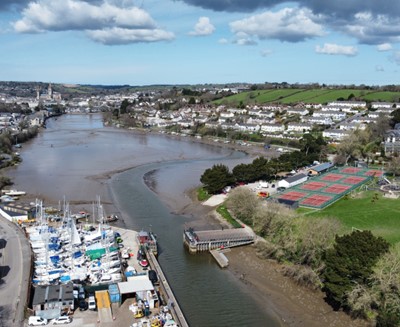
ABPmer's NRA supported the Environmental Statement for the Lighterage Quay Lifting Bridge, ensuring it complied with the PMSC
Learn more