
Informing the Queen Scallop Fisheries Management Plan
Supporting the preparation of an English FMP for queen scallops
Learn more

To inform future policy decisions around assigning bluefin tuna quota, the Department for Environment, Food & Rural Affairs (Defra) sought to understand how costs and benefits of bluefin tuna fishing are distributed across different commercial and recreational fisheries and scales (individual, local, town, etc.).
Defra commissioned ABPmer and Risk & Policy Analysts (RPA) to evaluate and compare the socio-economic value of the bluefin tuna fishery in English and Scottish waters, focusing on two trial fisheries:
The commercial fishery, which accessed the tuna through 10 trial licences
The recreational fishery, which accessed the tuna through a Catch and Release Tag (CHART) programme (which involved the catching, tagging and releasing bluefin tuna to monitor their population), involving 24 vessels
ABPmer led on the commercial fisheries engagement, and contributed to the overall study evaluation.
To support the study, we developed a 7-step analytical approach:
Step 1: Identifying existing data and additional data needs
Step 2: Designing a costs-benefits framework, and mapping of available data
Step 3: Creating evaluation questions and conducting engagement activities (commercial fishers only)
Step 4: Coding of engagement data and synthesis with MMO and Cefas data
Step 5: Cost Benefit Analysis of recreational and commercial fisheries
Step 6: 1, 5 and 10-year scenario analysis
Step 7: Quantification of impact differences
The social, economic, and (to a lesser extent) environmental impacts of the recreational and commercial fisheries were assessed and compared, demonstrating how the socio-economic Benefit-Cost Ratio (BCR) might develop over 1, 5 and 10 year scenarios.
The recreational and commercial fisheries were also subject to two sensitivity analyses to help understand the potential maximum and minimum benefits of each.
The trial is being evaluated again in 2024 - 2025, to help inform decisions on how bluefin tuna quota is managed in the future. The updated evaluation will also consider the expanded Bluefin tuna recreational fishery for 2024, and the changes in commercial quota allocation since 2023.
Read the full 2023 report at the Defra Science and Research Projects website
ABPmer supports policy-makers, regulators and the fisheries and aquaculture industry on marine environmental policy matters, assessment and management, including interactions between fisheries, marine protected areas (MPAs) and other marine developments.
Ready to discuss your next project? Get in touch.




Supporting the preparation of an English FMP for queen scallops
Learn more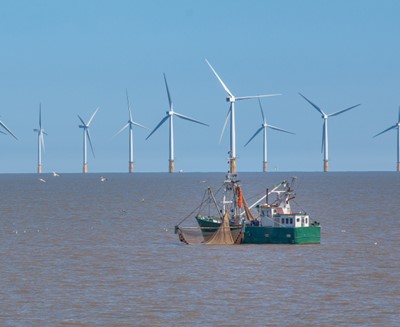
Our report for Defra supports the potential co-location of fishing activities within OWFs
Learn more
Supporting the Marine Stewardship Council with a report on the political and management landscape for blue whiting, mackerel and Atlanto-Scandian herring
Learn more