New EIA best practice guidance for Scottish Offshore Wind Farms
We are seeking industry perspectives on offshore wind EIAs as part of the development of best practice guidance
ABPmer is producing physical processes environmental impact assessment (EIA) guidelines for offshore wind farms on behalf of the Scottish Government (Offshore Wind Directorate).
ABPmer will be producing up-to-date best practice guidance, building on industry best practice and latest understanding of the assessment of fixed-bottom offshore wind farms in shallower coastal waters, and new and emerging issues from floating developments in deeper water.
As part of Environmental Impact Assessments (EIAs) for offshore wind farm developments, marine physical processes must be identified, as they can be pathways of potential impact on marine ecological features and other receptors, such as sensitive geomorphological features.
Physical processes are always identified for consideration as part of the EIA for offshore wind farms as they can be both pathways of potential impact (e.g. associated effects on marine ecological features) and receptors (such as sensitive geomorphological features). However, identification of the most appropriate assessment methodologies (e.g. using analogues and desk-based assessments, semi-quantitative analysis or numerical modelling tools) can be confusing for practitioners, regulators and stakeholders.
Get involved
To inform the project, we are seeking industry perspectives on offshore wind EIAs via a questionnaire and online workshop:
Industry questionnaire
If you are involved in offshore wind farm development, we would love to hear from you. To take part in our questionnaire (available in early September), please get in touch.
Online workshop
The project is also holding an online workshop on Tuesday 9 September (9.30-12.00) and there are a few remaining places available. To sign up, please contact us.
ABPmer assists the renewables sector throughout the project lifecycle; from site selection and feasibility, through environmental impact assessment and consenting to engineering design, construction and operation and maintenance.
Ready to discuss your requirements? Get in touch.
Header photo: MaxNoz/Shutterstock.com
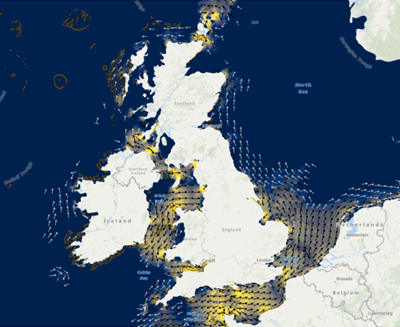
Mapping UK marine energy resources: latest Renewables Atlas update
Updates to the UK Atlas of Marine Renewable Energy support understanding of sediment transport and seabed mobility in the North Sea and across the wider northwest European continental shelf
Read article
Offshore wind in Scotland: updated marine plan at consultation
Scottish Government appointed ABPmer to support the revision of its Sectoral Marine Plan for Offshore Wind Energy, now at consultation
Read article
Tidal stream energy: what is the impact on marine species?
Our report, in collaboration with The Crown Estate, explores the collision risk for marine mammals, a significant barrier to tidal stream consenting
Read article